The Myth of Sisyphus (by Albert Camus)
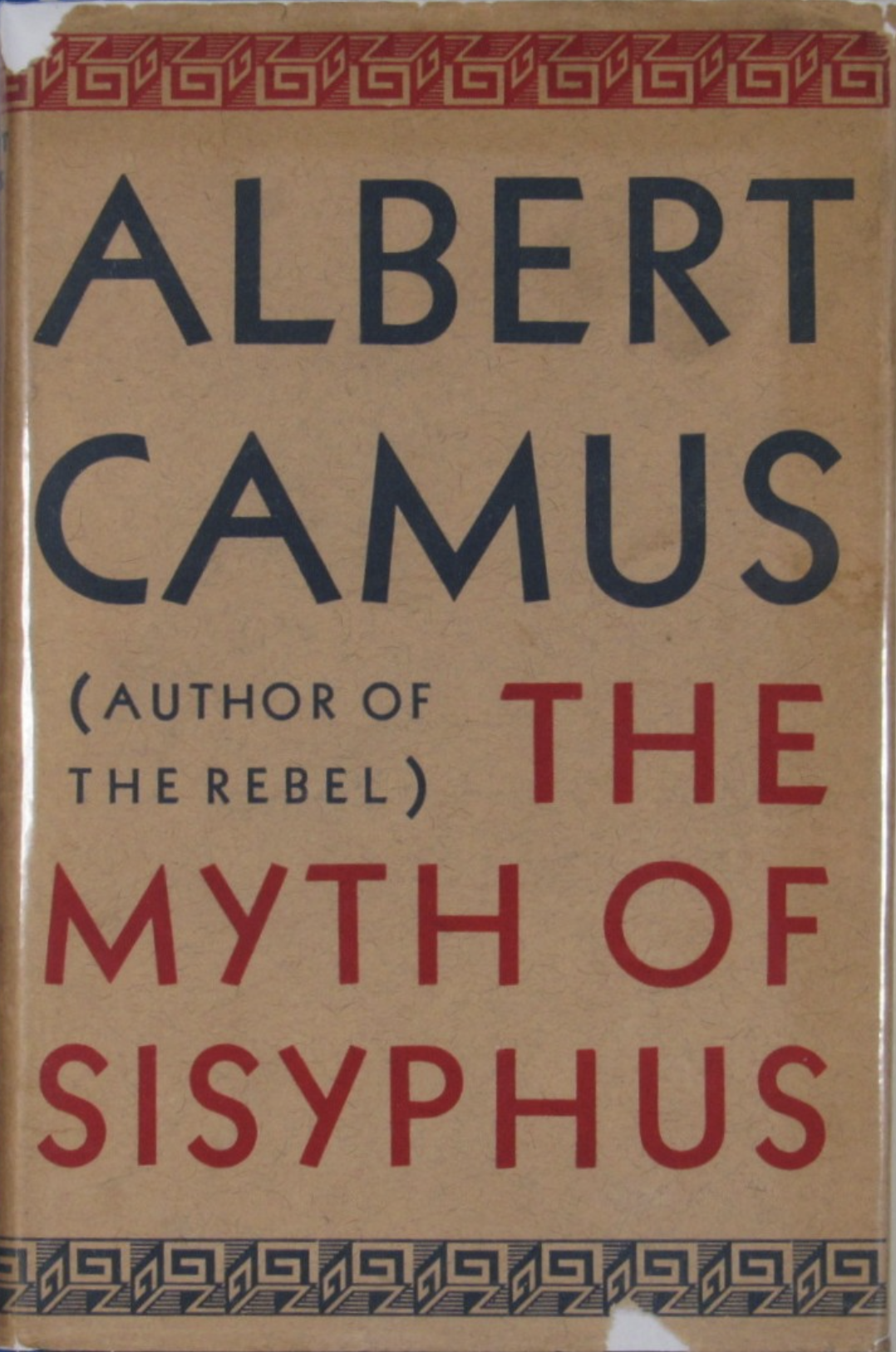
Translation by: Justin O’Brien
Publisher: Librarie Gallimard (French), Hamish Hamilton (English), Penguin Classics
Published at: 1942
Goodreads: https://www.goodreads.com/book/show/91950.The_Myth_of_Sisyphus
Wiki: https://en.wikipedia.org/wiki/The_Myth_of_Sisyphus
The Stranger Who Led Me to the Boulder
“To say that life is absurd, one must be alive”
I first encountered Albert Camus not through philosophy but through fiction, and not even in English. Years ago, during one of those phases where I was devouring anything that looked serious enough, I picked up a Bengali translation of "The Outsider" (L'Étranger).
Meursault’s indifference toward his mother’s funeral, toward the trial, toward his own death, left a peculiar taste. Not bitter exactly, more like biting into something you didn’t expect to be hollow.
But judging by my age back then - afterwards it was confusing to me, about what was responsible for the feeling. Re-reading that book left something different in me 15 years later.
But that reading planted a name in my head. And names, once planted, tend to grow sideways. Somewhere along the way, I came across mentions of "The Myth of Sisyphus", Camus’ philosophical companion piece to The Outsider. I collected a copy few years back, one of those impulse purchases driven by a vague sense that “I have to read this”. It then proceeded to do what many such books do: sit on my shelf, collecting dust and guilt in equal measure.
I couldn’t manage to find the right moment for some reason. Maybe the timing wasn’t right, or maybe I was subconsciously avoiding a book that opens with the question of whether one should kill oneself. Either way, I finally read it last month, and the timing, as it turns out, couldn’t have been better. Or worse. Depending on how you look at it.
The Philosophy That Refuses to Look Away
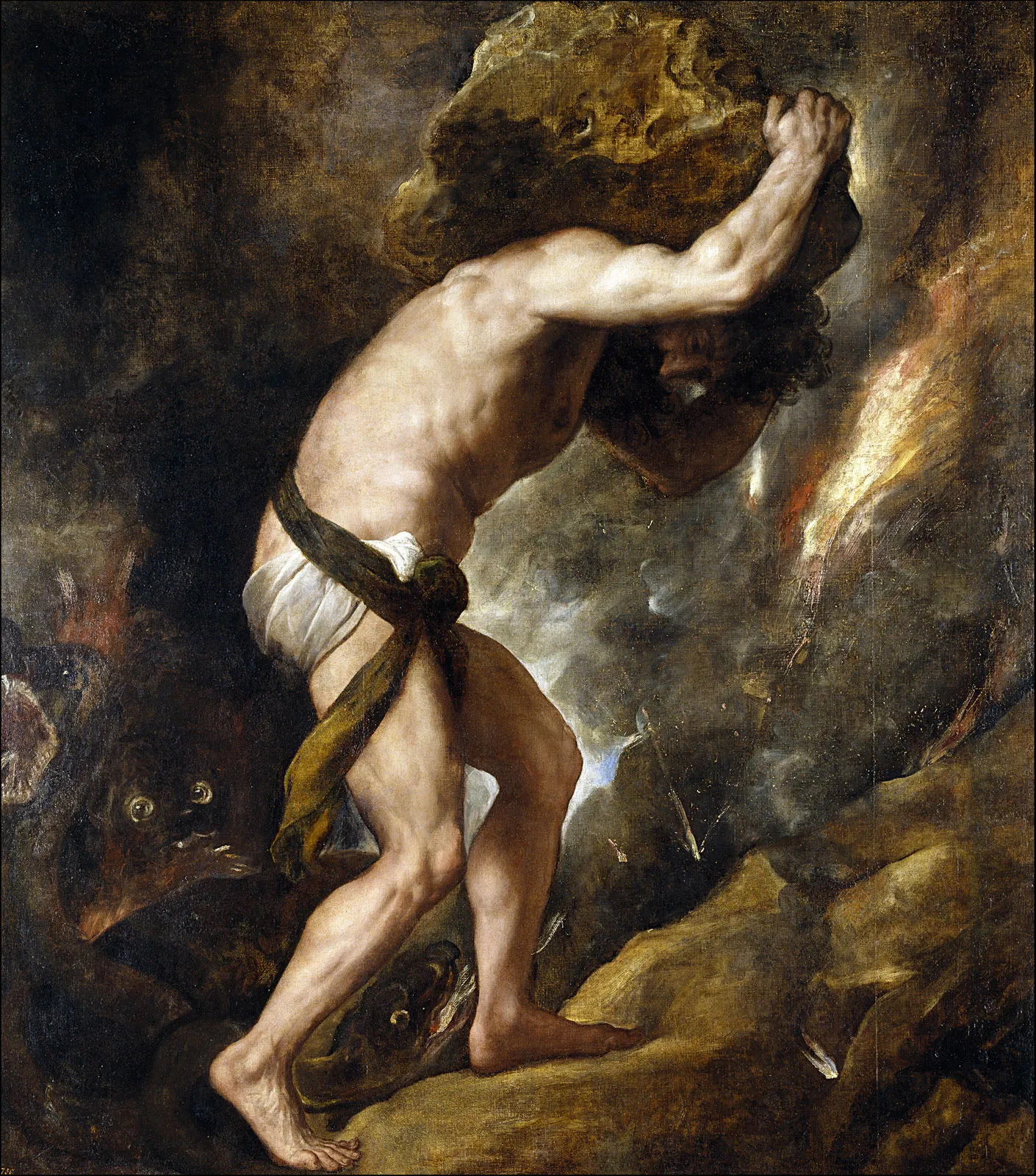
Long ago, Greek scholars created the fable of Sisyphus, in which Sisyphus rolls a boulder up a mountainside and considers himself successful. But before he can celebrate his success, the boulder rolls back down. German antiquarian Friedrich Welcker saw this as a fruitless attempt by humans to gain knowledge. Albert Camus says in his Myth of Sisyphus that the myth is a fruitless attempt to personalize the meaninglessness of life, where the effort itself is sometimes a joy, but the result is never. Because the result is meaningless.
Indian mythology says that the more closely we try to look at life, the more we will see that reality is all illusion - and we must focus on the work itself, not the result (Karmayoga, Bhagabat Geeta).
So what is Absurdism? In simple terms, it is the philosophy born from the collision between two forces: our desperate human need to find meaning in life, and the universe’s cold, absolute refusal to provide any.
Whereas Kierkegaard leaped toward God for finding meaning, Nietzsche declared “God dead” and proposed that we create our “own meaning” - Camus did neither. He stood at the edge, looked into the void, and said: “I will not jump, I will not look away, and I will not pretend the void is not there.”
He wrote this in 1942, during the Fall of France, while millions of refugees fled from advancing German armies. The world was literally falling apart around him. I think it is safe to assume or imagine that – in that context, the question “is life worth living?” was not academic.
It was urgent, immediate, and painfully concrete.
The core of his philosophy rests on three pillars: revolt (refusing to accept the absurd passively), freedom (liberated from the illusion of purpose, we are free to live fully), and passion (embracing the intensity of experience without the crutch of hope). Camus didn’t reject life. He rejected the consolation prizes, the false comforts, the escape routes. What remained, he argued, was enough.
What Rolls Inside the Pages
The book is structured as a philosophical essay in four chapters and an appendix. It’s dense, argumentative, and occasionally maddening, but once settled in it has a charm to it.
An Absurd Reasoning
Camus opens with what he considers the only serious philosophical question: suicide. If life is meaningless, why go on? He surveys existentialist philosophers, from Kierkegaard to Husserl, and accuses them all of what he calls “philosophical suicide”, abandoning the absurd by leaping toward faith or abstract reason instead of sitting with the discomfort.
The Absurd Man
How then should one live? Camus sketches three archetypes:
Don Juan, the serial lover who chooses quantity of experience over depth;- the
Actor, who inhabits many lives yet owns none; and - the
Conqueror, who acts within history knowing nothing lasts.
None of them appeal to a higher meaning. They live fully, within their limits, without consolation.
Absurd Creation
Here Camus turns to the artist.
Since the world cannot be explained, absurd art must describe rather than explain.
He examines Dostoevsky's work, particularly The Brothers Karamazov, and argues that while Dostoevsky starts from the absurd, he ultimately retreats into faith, and therefore fails as a truly absurd creator. “If the world were clear, art would not exist.”
Hope and the Absurd in the Work of Franz Kafka
The appendix is devoted to Kafka.
Camus finds Kafka’s worlds, The Trial, The Castle, to be exquisite descriptions of the absurd condition.
Characters trapped in bureaucratic labyrinths, chasing answers that never come, navigating systems that make no sense.
Yet Camus argues that even Kafka ultimately retains a glimmer of hope, a theological residue that prevents his work from being purely absurd.
It is a strange kind of compliment: Kafka captures the absurd better than anyone, but cannot quite bring himself to stay there.
The Boulder That Kept Rolling Through Culture
The impact of this essay extends far beyond philosophy departments. When Camus published it in 1942, questions of meaning were everywhere in the war-ridden Europe. The essay became a founding text of Absurdism and helped define the intellectual landscape of post-war Europe. Camus won the Nobel Prize in Literature in 1957.
The phrase “One must imagine Sisyphus happy” has since become one of the most quoted lines in modern philosophy, appearing in everything from university lectures to internet memes.
The book influenced the Theatre of the Absurd movement, shaping playwrights like Samuel Beckett (Waiting for Godot), Eugène Ionesco, and Harold Pinter. Its fingerprints are on existentialist cinema, post-war literature, and even contemporary discussions about burnout, corporate drudgery, and the search for purpose in an increasingly secular world.
Other Rocks Worth Pushing
After reading the book, I came to know lots of material (some of which I liked for a long time) was actually impacted by Absurdism and Sisyphus:
Books:
- The Stranger (L’Étranger) by Albert Camus - the novel that walks alongside this essay; Meursault is the absurd man in fiction form
- The Rebel (L’Homme révolté) by Albert Camus - his follow-up essay, extending absurdism into political revolt
- The Trial by Franz Kafka - the book Camus dissects in the appendix
- The Sickness Unto Death by Søren Kierkegaard - the leap of faith that Camus rejects
- Man’s Search for Meaning by Viktor Frankl - a counterpoint: meaning can be found even in suffering
Cinema & TV:
- The Seventh Seal (1957) by Ingmar Bergman - playing chess with Death, the quintessential absurd confrontation
- The Truman Show (1998) - a man discovering his entire life is a constructed illusion
- Russian Doll (Netflix) - a Sisyphean loop of dying and reliving, played with dark humor
Music:
The Cure- “A Forest”, “Disintegration” - the emotional landscape of the absurdRadiohead- “OK Computer”, “Kid A” - alienation and meaninglessness in modern life
Should You Roll This Rock?
Yes: if you have ever stared at a ceiling at 3 AM wondering what exactly the point of all this is, and found that question more energizing than depressing. If you want philosophy that reads like a manifesto rather than a textbook.
Maybe not: if you prefer your philosophy neatly resolved, or if you’re looking for comfort. Camus doesn’t comfort. He clarifies. And clarity, as he would remind us, is not the same as warmth.
Verdict: read it when the world feels particularly indifferent to your efforts. That’s when the image of Sisyphus, walking back down the mountain to his boulder, feels less like a punishment and more like a quiet act of defiance.
“The struggle itself towards the heights is enough to fill a man’s heart. One must imagine Sisyphus happy.”